
Specialist Headache Treatment in Edinburgh
Headaches That Keep Coming Back?
Focussed, gentle chiropractic care to help make persistent headaches less painful, less frequent and less disruptive.
So you can think clearly, work and exercise without pain wearing you down and still have energy at the end of the day.
5-star Google rating
More than 15 years’ clinical experience
Treatment can usually begin at your first appointment
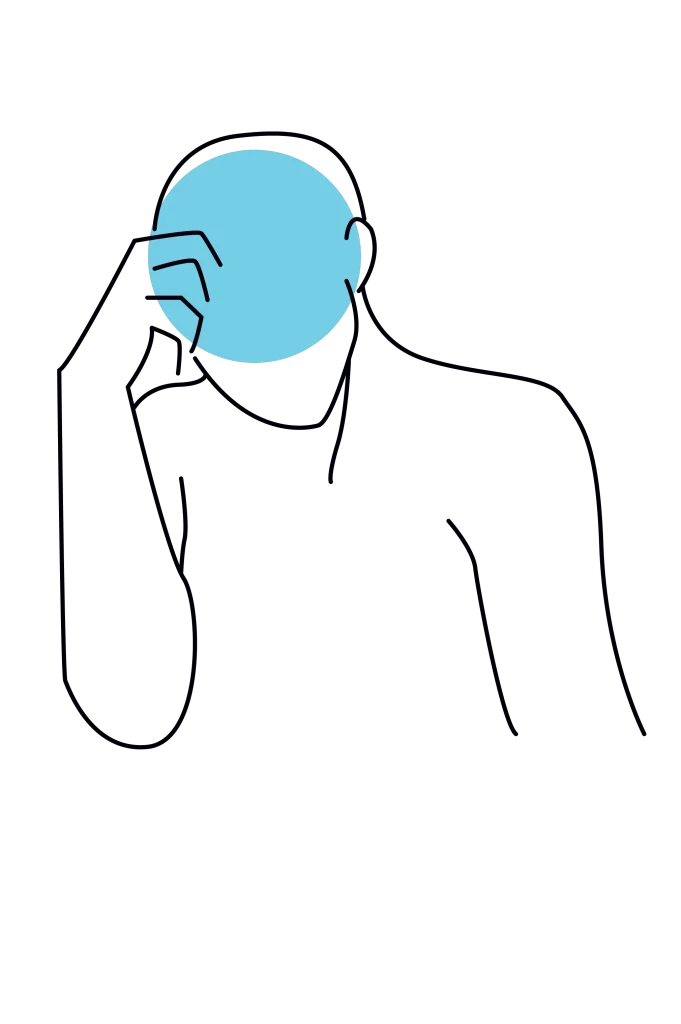

The Daily Impact of Chronic Headaches
A headache doesn’t have to stop you completely to affect your entire day.
You may wake with pressure behind your eyes, tightness around your temples or an ache beginning at the base of your skull.
A few hours at a screen makes it harder to concentrate. Turning your head feels restricted. Your neck and shoulders become progressively tighter as the day continues.
You keep working, but everything requires more effort. You lose your train of thought, become less patient and finish the day with little energy left.
Painkillers may take the edge off, but the headache gradually returns. You rub your temples, stretch your neck and hope tomorrow will be different.
Over time, the headache becomes a constant background distraction. Even when the pain is manageable, part of your attention is always occupied by it.
You want more than another temporary reprieve. You want to understand why it keeps happening and what can be done to change the pattern.
Why Do Headaches Keep Coming Back?
Headaches have many possible causes.
But recurring headaches are often closely connected with how the neck, upper spine, jaw and muscles around the base of the skull are working.
This is more likely when your headaches occur alongside:
- neck pain or stiffness
- restricted head movement
- tenderness at the base of the skull
- prolonged screen or desk work
- poor posture
- jaw tension or clenching
- pain that begins in the neck and travels into the head
Muscle and joint tension can place additional strain on sensitive structures around the neck and refer pain into the head.
Medication may help control the pain without addressing these physical factors. This can leave you repeatedly managing each headache without addressing the underlying cause.
A specialist assessment establishes whether your headache pattern is connected with your neck and posture, and whether chiropractic treatment is an appropriate way forward.

Specialist Focus. Lasting Relief.
Dr Paul Holmes specialises in persistent headaches particularly when symptoms overlap with neck pain, jaw tension or head pressure.
With more than 15 years’ clinical experience and advanced training in complex pain, neurology and cranial techniques, he brings specialist expertise to symptoms that keep returning or haven’t improved with previous care.
Your treatment is based on your individual headache pattern, not a generic protocol.
The goal is to reduce pain, make headaches less frequent and help you work, exercise and make plans without pain occupying your attention or draining the rest of your day.

Your Initial Consultation
A Thorough Assessment. Clear Answers. A Plan for Recovery.
Your first appointment is designed to identify what is contributing to your headaches so we can begin the right treatment for you.
The steps below provide an overview. Your assessment itself is thorough and tailored to your symptoms, history and clinical findings.
1. Tell Us What Has Been Happening
Paul will ask when your symptoms began, how often they occur, what the pain feels like and whether you notice warning signs, triggers or associated symptoms.
He will also review any medication, previous treatment, scans or medical investigations.
2. A Specialist Clinical Assessment
Paul will assess the areas most likely to be contributing to your headaches including your neck, posture, upper spine, jaw and the muscles around the base of your skull.
He will look at how these areas move, where tension or irritation is building and whether your symptoms are linked to posture, screens, jaw clenching or restricted neck movement.
Where relevant, he will also assess balance, eye movements and other neurological signs connected with your symptoms.
3. Explanation and Treatment
Paul will explain what he has found, which factors are contributing to your headaches and how treatment can help.
Where appropriate, treatment can begin during the same appointment and is included in your consultation fee.
Worried about the cracking?
If that’s what’s put you off seeing a chiropractor, this is worth reading.
Paul works with a wide range of techniques – from traditional adjustments through to methods gentle enough to use on a newborn baby. Which one he uses depends on your symptoms, your history and how your body responds on the day.
He’ll explain what he’s planning to do, and why, before he does it. If you’d rather not have a particular technique, say so. There’s almost always another way.
Initial Consultation and Examination: £95.00

Why Choose Dr Paul Holmes?
Dr Paul Holmes is the principal chiropractor at One Chiropractic.
He holds a master’s degree in chiropractic and is registered with the General Chiropractic Council, the statutory body responsible for regulating chiropractors in the UK.
Paul has more than 15 years’ clinical experience and has completed further world-class training with global leaders in headache care, cranial techniques, functional neurology and complex pain syndromes.
He works with people experiencing persistent headaches every day.
This means your symptoms are being assessed by an experienced clinician who understands the difference between a straightforward headache and a more complex pattern requiring specialist care.
Paul’s approach is calm, precise and thorough.
He will listen carefully, explain what he finds and give you a clear plan focussed on reducing your headaches and helping you regain your concentration, movement and energy.
Headache Treatment in Edinburgh
Based in Edinburgh, with patients attending from Leith, the city centre and across the wider Lothians.
Stop Carrying a Headache Through Every Day
You’ve spent long enough struggling through work, reaching for painkillers and ending the day with nothing left.
Find out why your headaches keep returning and start changing the pattern.
Book a specialist consultation with Dr Paul Holmes and start moving towards clearer working days, enjoyable evenings and the freedom to make plans without another headache taking over.