
Specialist Headache Treatment in Edinburgh
Headaches That Keep Coming Back?
Gentle, expert care for headaches that keep coming back, so you can think clearly, get through the working day and still have energy left for the evening.
- More than 15 years’ clinical experience
- Treatment can usually begin at your first appointment
- Registered with the General Chiropractic Council

The Daily Impact of Chronic Headaches
A headache doesn’t have to stop you completely to affect your entire day.
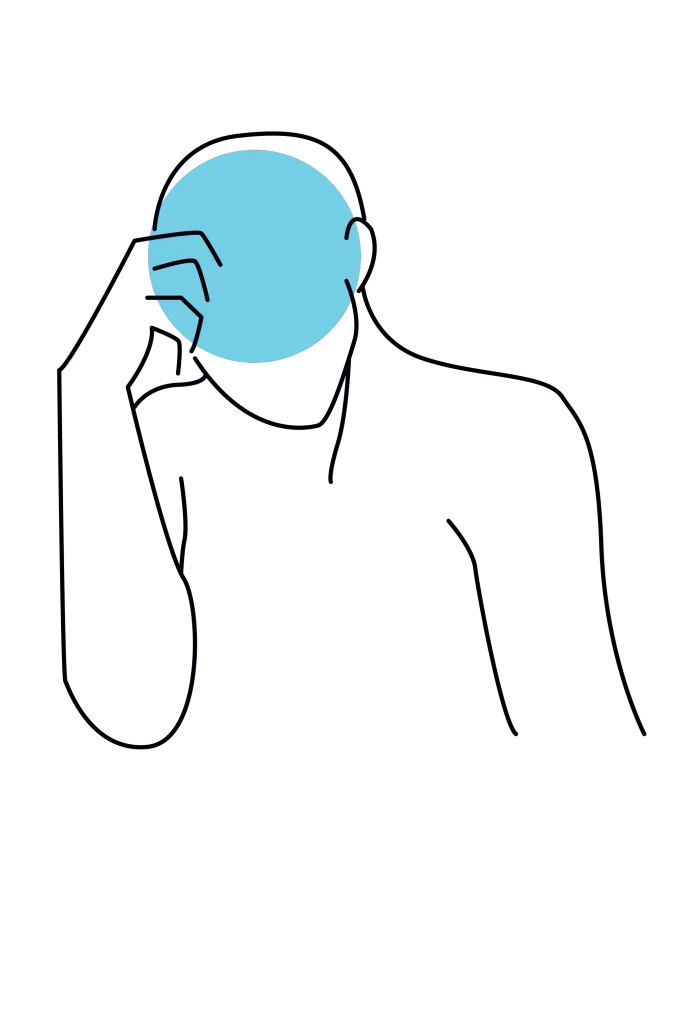
You may wake with pressure behind your eyes, tightness around your temples or an ache beginning at the base of your skull.
A few hours at a screen makes it harder to concentrate. Turning your head feels restricted. Your neck and shoulders become progressively tighter as the day continues.
You keep working, but everything requires more effort. You lose your train of thought, become less patient and finish the day with little energy left.
Painkillers may take the edge off, but the headache gradually returns. You rub your temples, stretch your neck and hope tomorrow will be different.
Over time, the headache becomes a constant background distraction. Even when the pain is manageable, part of your attention is always occupied by it.
You want more than another short break from the pain. You want to know why it keeps happening, and how to stop it.
Why Do Headaches Keep Coming Back?
Headaches have many possible causes.
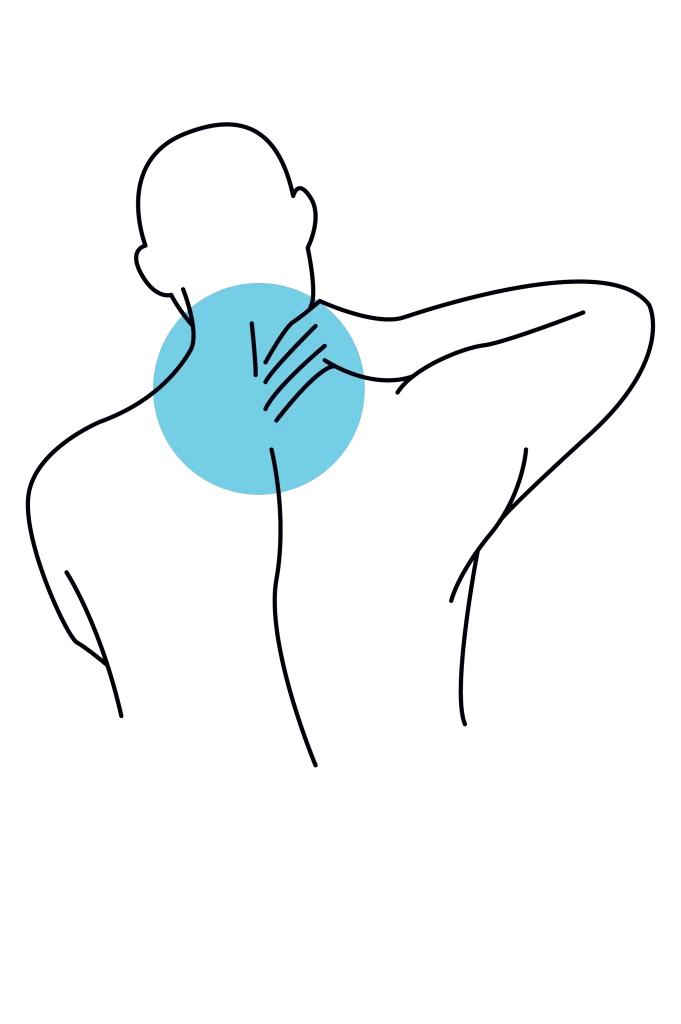
But recurring headaches are often closely connected with how the neck, upper spine, jaw and muscles around the base of the skull are working.
This is more likely when your headaches occur alongside:
- neck pain or stiffness
- restricted head movement
- tenderness at the base of the skull
- prolonged screen or desk work
- poor posture
- jaw tension or clenching
- pain that begins in the neck and travels into the head
Muscle and joint tension can place additional strain on sensitive structures around the neck and refer pain into the head.
Medication may help control the pain without addressing these physical factors. This can leave you managing each headache as it comes, without ever dealing with the cause.
Your assessment shows whether your headaches are coming from your neck and posture, and whether chiropractic is the right way forward.
Beyond the Next Painkiller
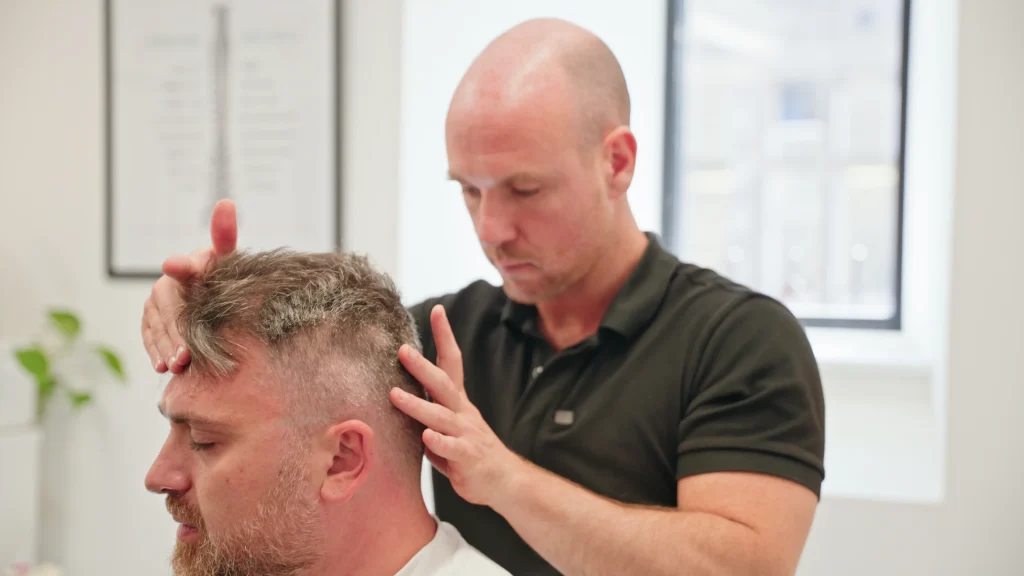
Your treatment is based on your headaches, not a generic routine. It’s gentle, and often includes cranial techniques alongside work on the neck and upper back.
Many people come to Paul when their headaches come with neck pain, jaw tension or head pressure, and other care hasn’t helped. The aim is to get you headache-free, and help you stay that way.
Your Initial Consultation
Here’s what to expect.
Your first appointment is designed to identify what is contributing to your headaches so we can begin the right treatment for you.
1. Tell Us What Has Been Happening
Paul will ask when your symptoms began, how often they occur, what the pain feels like and whether you notice warning signs, triggers or associated symptoms.
He will also review any medication, previous treatment, scans or medical investigations.
2. A Specialist Clinical Assessment
Paul will assess the areas most likely to be contributing to your headaches including your neck, posture, upper spine, jaw and the muscles around the base of your skull.
He will look at how these areas move, where tension or irritation is building and whether your symptoms are linked to posture, screens, jaw clenching or restricted neck movement.
Where relevant, he will also assess balance, eye movements and other neurological signs connected with your symptoms.
3. Explanation and Treatment
Paul will explain what he has found, which factors are contributing to your headaches and how treatment can help.
Where appropriate, treatment can begin during the same appointment and is included in your consultation fee.
Worried about the cracking?
If that’s what’s put you off seeing a chiropractor, this is worth reading.
Paul works with a wide range of techniques – from traditional adjustments through to methods gentle enough to use on a newborn baby. Which one he uses depends on your symptoms, your history and how your body responds on the day.
He’ll explain what he’s planning to do, and why, before he does it. If you’d rather not have a particular technique, say so. There’s almost always another way.
Initial Consultation and Examination: £95.00
Includes a full assessment and, where appropriate, treatment the same day.

Why Choose Dr Paul Holmes?
Dr Paul Holmes is the principal chiropractor at One Chiropractic.
He holds a master’s degree in chiropractic and is registered with the General Chiropractic Council, the statutory body responsible for regulating chiropractors in the UK.
Paul has more than 15 years’ clinical experience and has completed further training in headache care, cranial techniques, functional neurology and complex pain, including functional neurology with Dr Michael Hall and cranial technique with Dr Steve Williams.
Headaches that won’t go away are what he works with every day, so he can tell a straightforward headache from one that needs a closer look.
He will listen carefully, explain what he finds and give you a clear plan to get you headache-free.
Headache Treatment in Edinburgh
Based at Suite 76, Bonnington Bond, 2 Anderson Place, Edinburgh EH6 5NP, with patients attending from across Edinburgh and the Lothians. There’s free on-street parking nearby, the 10 and 36 buses stop a minute away, and it’s a 10-minute walk from the Foot of the Walk tram stop. More about getting here →
Stop Carrying a Headache Through Every Day
You’ve spent long enough getting through work on painkillers and finishing the day with nothing left. Left alone, headaches like these rarely go away by themselves, and for some people they become more frequent.
Imagine a working week with a clear head, evenings you enjoy and plans you don’t have to cancel. Your first appointment will show you what’s causing your headaches, and treatment can usually begin the same day.