Chronic headaches or migraines that keep coming back?

Specialist headache and migraine care in Edinburgh

Focussed, gentle, expert chiropractic care to support fewer headaches and less disruptive migraines and help you get back to concentrating, working and making plans with confidence.

5-star Google rating
More than 15 years’ clinical experience
Treatment can usually begin at your first appointment

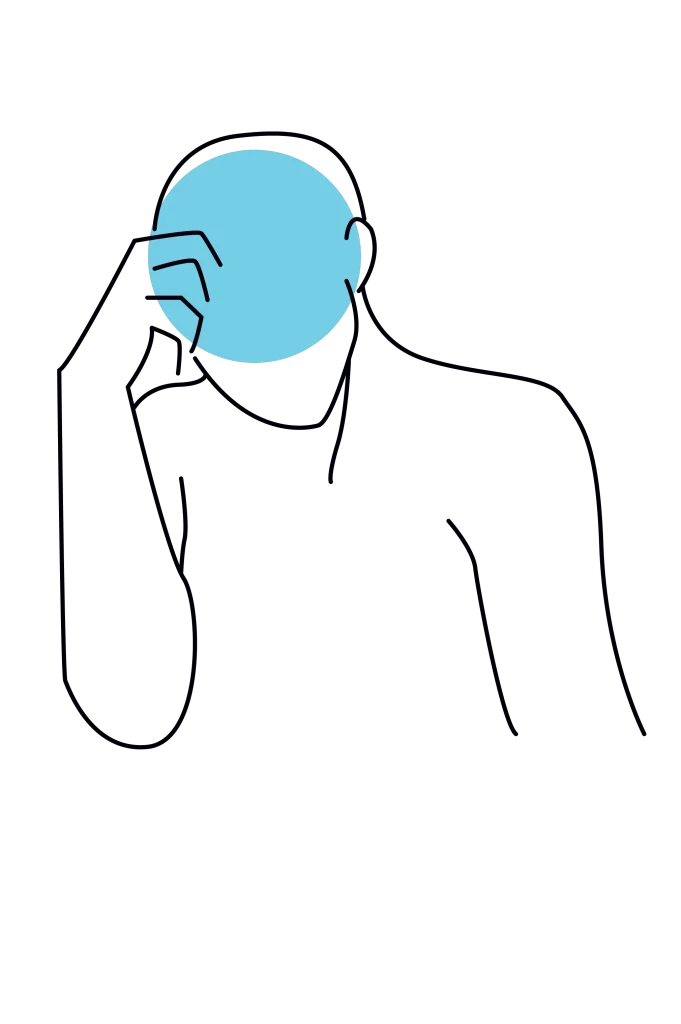
Illustration of a person holding their head, representing persistent headaches or migraine-related head pressure.
Woman experiencing chronic headaches and head pain at work

The Daily Impact of Ongoing Headaches and Migraines

Recurring headaches and migraines aren’t just painful. They interrupt your concentration, drain your energy and make it difficult to trust that the day will go as planned.

You may wake with pressure behind your eyes, tightness at the base of your skull or the familiar feeling that a migraine is beginning.

A few hours at a screen can leave you struggling to concentrate. Bright lights, noise or a busy environment can become unbearable. Medication may dull the pain, but you still lose focus, energy and part of the day.

You carry painkillers. You ration your screen time. You leave work early, cancel plans or avoid exercise because you don’t know what will bring the next episode on.

With frequent headaches, the pain can become a constant background distraction.

With migraines, the uncertainty can be just as difficult. You may feel well in the morning yet be unable to function by the afternoon.

Even on good days, you’re still wondering how long the relief will last. Over time this becomes exhausting.

Why Do Headaches and Migraines Keep Coming Back?

Headaches and migraines are not all caused by the same thing.

Some are strongly influenced by tension, restricted movement or irritation through the neck, upper spine, jaw and base of the skull.

Others are more clearly neurological, but may still be aggravated by neck tension, jaw clenching, poor posture, prolonged screen use, disrupted sleep or physical and mental strain.

This is why medication may reduce the pain without stopping it from returning.

It can help manage the episode while leaving important physical contributors unchanged.

If your headaches or migraines are accompanied by neck stiffness, pain at the base of your skull, jaw tension or head pressure, these areas need to be properly assessed.

The right assessment helps establish which factors are driving your symptoms and what can be changed to reduce their frequency and impact.

Diagram illustrating upper back and shoulder pain area highlighted

Specialist Focus. Lasting Relief.

Dr Paul Holmes specialises in persistent headaches and migraines, particularly when symptoms overlap with neck pain, jaw tension or head pressure. 

With more than 15 years’ clinical experience and advanced training in complex pain, functional neurology and cranial techniques, he brings specialist expertise to symptoms that have kept returning or have not improved with previous care.

Your treatment is based on your individual headache or migraine pattern, not a standard protocol.

The goal is to reduce pain, make episodes less frequent and help you work, exercise and make plans without worrying about when the next episode will strike. 

Chiropractor assessing neck and spine alignment in clinic

Patient Experiences


  • I came to Paul with almost daily headaches that were affecting my focus and productivity with a busy uni and work schedule.

    Paul supported me through an initial care plan that included adjustments, exercises, and practical advice, and I started seeing real improvements.

    Life is much easier without the constant headaches, and I can stay productive and focused again.
    Rebecca Bain
    Edinburgh

  • My migraines used to control my schedule, my mood and my energy levels. Since starting treatment with Paul, they’ve become far less frequent and much more manageable, which has been life changing.

    I can work, sleep and make plans without constantly worrying about when the next migraine will hit.

    The care from Paul is always thorough, professional and genuinely focused on long-term improvement, not quick fixes. This has had a huge positive impact on my quality of life and I’m so grateful.
    Sarah Watt
    Edinburgh

Your Initial Consultation

A Thorough Assessment. Clear Answers. A Plan for Recovery.

Your first appointment is designed to identify what is contributing to your headaches or migraines so we can begin the right treatment for you.

The steps below provide an overview. Your assessment itself is thorough and tailored to your symptoms, history and clinical findings.

1. Tell Us What Has Been Happening

Paul will ask when your symptoms began, how often they occur, what the pain feels like and whether you notice warning signs, triggers or associated symptoms.

He will also review any medication, previous treatment, scans or medical investigations.

2. A Specialist Clinical Assessment

Paul will assess the areas most likely to be contributing to your headaches or migraines, including your neck, upper spine, jaw and the muscles around the base of your skull.

He will look at how these areas move, where tension or irritation is building and whether your symptoms are linked to posture, screens, jaw clenching or restricted neck movement.

Where relevant, he will also assess balance, eye movements and other neurological signs connected with your symptoms.

3. Explanation and Treatment

Paul will explain what he has found, which factors are contributing to your headaches or migraines and how treatment can help.

Where appropriate, treatment can begin during the same appointment and is included in your consultation fee.

Initial Consultation and Examination: £95.00

Dr Paul Holmes Chiropractor Specialising in Headaches and Migraines

Why Choose Dr Paul Holmes?

Dr Paul Holmes is the principal chiropractor at One Chiropractic.

He holds a master’s degree in chiropractic and is registered with the General Chiropractic Council, the statutory body responsible for regulating chiropractors in the UK.

Paul has more than 15 years’ clinical experience and has completed further world-class training with global leaders in migraine care, cranial techniques, functional neurology and complex pain syndromes.

He works with persistent headaches, migraines and related neck and jaw symptoms every day.

This means your symptoms are being assessed by an experienced clinician who understands the difference between a straightforward headache and a more complex pattern involving the neck, jaw, nervous system and surrounding structures.

Paul’s approach is calm, precise and thorough.

He will listen carefully, explain what he finds and give you a clear plan focussed on reducing your symptoms and helping you regain control of your day.

Headache and Migraine Clinic in Edinburgh

Based in Edinburgh, with patients attending from Leith, the city centre and across the wider Lothians.

Stop Losing Days to Migraines and Headaches

You’ve spent long enough planning around headaches and migraines.

Find out what’s driving them and start reducing the pain, frequency and disruption.

Book a specialist consultation with Dr Paul Holmes and start moving towards clearer thinking, greater freedom and the confidence to make plans again.

Headaches and Migraines – Common Questions

Scans rule out serious pathology, but they don’t assess how the head, neck and nervous system are coping with load and stress. When headaches are driven by sensitivity or dysfunction in this system, imaging can appear normal while symptoms persist.

Chiropractic care may help when headaches are linked to tension, neck stiffness, jaw strain, poor posture, or irritation around the upper neck and base of the skull. These are often described as tension headaches, cervicogenic headaches, posture-related headaches or recurring head pressure. At your first appointment, we assess whether your symptoms appear to have a physical driver and whether this approach is suitable for you.


Yes. Neck tension headaches are common, particularly when pain builds with posture, stress or sustained concentration. In some people, this neck-related strain also contributes to migraine patterns.

It can. Jaw tension and clenching often interact with the neck and head. This can contribute to headaches from jaw tension or a sense of pressure or heaviness in the head.

Many people who attend have already tried other approaches. That does not mean those treatments were wrong. Often it means the specific driver of the headaches was not fully identified. This care is more narrowly focused on head- and neck-related contributors and is commonly used when broader care has not led to lasting change.

Yes. Many headaches are linked to how the neck is coping with everyday demands rather than a single injury. This is why symptoms can persist or fluctuate even when there is no clear event and tests appear normal.

If headaches are frequent, persistent, worsening, or affecting your ability to think, work or function, a more focused assessment can be helpful. The initial consultation is designed to determine whether this approach is appropriate for you.

Headaches usually describe pain or pressure in the head, while migraines can involve additional symptoms such as light sensitivity, nausea, visual disturbance, fatigue, or difficulty concentrating. Some migraine patterns are influenced by neck tension, stress, jaw clenching, posture, or physical overload, which is why a detailed assessment of the neck, jaw and upper spine can be helpful.

Yes. Long periods at a desk, sustained screen use and reduced movement can increase strain through the neck, shoulders and base of the skull. Over time, this can make headaches easier to trigger, especially later in the day or after intense concentration. Treatment usually focuses on reducing strain, improving movement and helping your body tolerate daily demands more comfortably.

No, you do not usually need a GP referral to book an initial consultation. If your symptoms suggest that medical investigation is needed, you will be advised appropriately. The consultation is designed to understand your headache or migraine pattern, assess whether your neck, jaw or upper spine may be contributing, and explain whether chiropractic care is suitable.