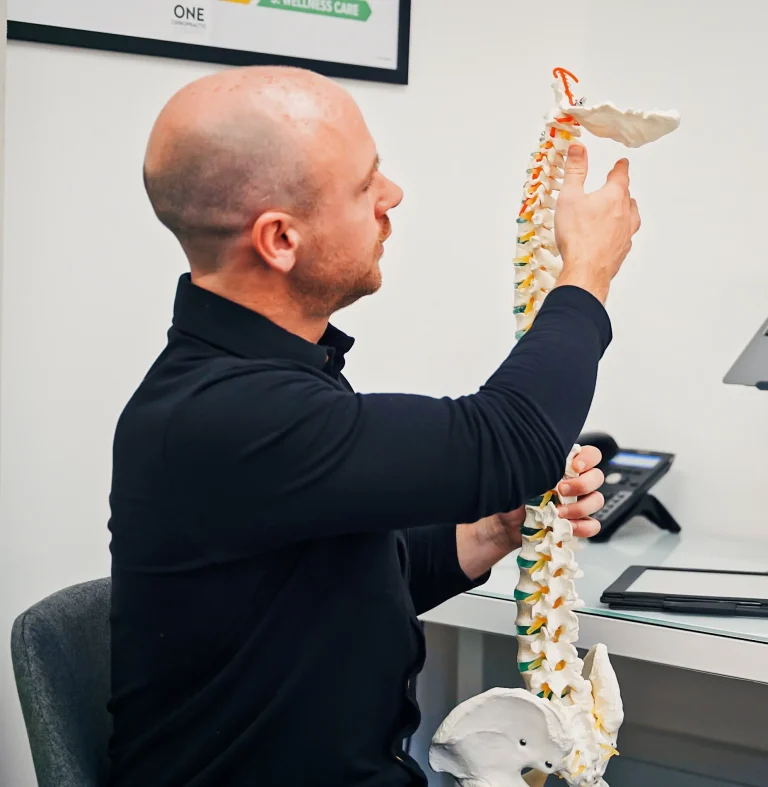
Poor Posture: How It Can Contribute to Neck Pain, Jaw Tension and Headaches
Most of us don’t wake up with “bad posture”.
What usually happens is simpler: you spend hours in positions your body can cope with for a while, but not indefinitely.
Desk work. Laptop work. Driving. Slumping into the sofa. Sitting slightly twisted. Leaning on one arm. Chin forward. Shoulders creeping up.None of that is a problem for five minutes.
It becomes a problem when it’s your default for months.
This is not about sitting bolt upright all day. There is no perfect posture. What matters more is how long you stay in one position, and whether your posture is balanced.
The simple idea: sustained positions create sustained load
When you sit slumped or slightly forward, your neck has to do more holding.
When you sit twisted, one side of your neck and shoulder does more work.
When you work on a laptop low down, your chin tends to drift forward and your upper neck works harder to keep your eyes on the screen.
Over time, that repeated load can contribute to:
- Neck tightness and stiffness
- Pressure at the base of your skull
- Headaches that build through the day
- Jaw bracing or clenching during concentration
- A heavy head feeling and general “wired” tension by late afternoon
The key point is not posture as a moral failing.
It’s simple mechanics plus time.
Desks: the hidden posture problem is not the chair, it’s the duration
A decent desk set-up helps, but it won’t fix things if you stay in the same position for hours.
Keep it simple.
Upright, not uptight.
Sit balanced, not twisted.
Don’t lean into one side.
Then break it up.
Take regular short breaks. Even 20–30 seconds to stand, reset, and sit back down can make a difference.
Sofas: the comfort trap
Sofas are where posture quietly gets worse.
You rarely sit centred. You lean into one side. You sit slightly rotated. Your head drifts forward towards the TV.
If you spend the day at a desk, then spend the evening slumped, your neck doesn’t really get a break. It just changes form.
Keep it simple:
- Sit upright, not uptight.
- Keep your head balanced, with your ears roughly in line with your shoulders.
- Stay centred. Don’t lean or twist.
If you need support, use a cushion only to help you stay upright and centred, not to prop you into a slump.
Not perfect posture. Just less strain.
Why posture links to headaches and jaw tension
Here’s the pattern I see a lot:
You’re at a desk or on a screen most of the day, and your neck ends up doing more holding than it should. Without meaning to, you brace through your jaw during focus or stress. By mid-afternoon, you feel tighter, more reactive, and the symptom that shows up is head pressure or a headache.
That is why bad posture can be so misleading. It does not cause one neat symptom. It creates a load pattern that shows up in different places, and often more than one at a time.
If you want to understand the jaw side of that overlap, you can read more here: Jaw Pain (TMJ-related).
If neck symptoms are the dominant feature, start here: Neck Pain.
If headaches are frequent or recurring, this page may help: Headaches & Migraines.
What matters more than “good posture”
If you remember nothing else, remember this:
Forward head posture is associated with neck pain in adults, but posture is not the whole story, and it is not the only driver.
There’s no perfect posture. Staying still too long is the bigger issue.
Short breaks often beat occasional long breaks.
What to change this week
1) The 30-second reset
Every 30 minutes:
- stand up
- roll your shoulders back once
- turn your head left and right
- take 3 slow breaths
- sit back down
I know it’s boring. But it works because it changes how you’re loading your head and neck.
2) Make your screen meet you
If your screen is low, your neck pays for it.
Aim to have the middle of your screen roughly at eye level, so you’re not constantly looking down.
If you use a laptop, it’s worth investing in a simple stand and using a separate keyboard and mouse. That one change often makes desk work feel noticeably easier on your neck.
3) Sit balanced and upright, not uptight
BThink centred, not perfect.
Balanced means:
- your weight is even, not dumped into one hip
- you’re not leaning into one arm
- you’re not sitting twisted to one side
- your shoulders feel level, not one higher than the other
Upright just means your head is stacked over your body, not drifting forward. Same idea at your desk and on the sofa. If you catch yourself slumping or twisting, reset and carry on.
Posture Is a Habit
Posture is a habit. The first step is awareness.
If you catch yourself slumped, leaning into one side, or sitting crossed over, don’t beat yourself up. Just notice it. That’s the win. Then reset.
Each time you do that, you’re training a better default. Over time, your posture naturally shifts into something more balanced and more supportive for your head and neck, whether you’re working, driving, or relaxing.