TMJ Treatment in Edinburgh: Physio, Massage, Dentist or Chiropractor?

If you’ve got jaw pain, clenching or TMJ pain that won’t settle, you’ve probably noticed there’s no single obvious person to see. Dentists, physios, massage therapists and chiropractors all work with the jaw, and each comes at it from a different angle.
Here’s what each one does, what they’re best at, and how to decide where to start. We’re a chiropractic clinic, so we’ll say that up front, but the right choice depends on what’s behind your symptoms.
First, what is TMJ pain?
The temporomandibular joint (TMJ) is the hinge just in front of each ear that connects your jaw to your skull. “TMJ” or “TMD” is the umbrella term for pain and tension in the joint and the muscles that move it.
Common signs include:
- Aching in the jaw, temples or cheeks
- Tightness when you wake up
- Difficulty opening your mouth fully
- Clenching or grinding, during the day or at night
- Pressure around the ears or face
- Headaches that sit around the temples
For most people, it’s a problem with how the jaw is working and how much load it’s under, rather than damage you’d see on a scan.
The dentist
Usually the first stop, and often the right one. A dentist can check your teeth and bite, spot wear from grinding and rule out dental causes such as a problem tooth.
The most common treatment is a splint or night guard. It protects your teeth from grinding and eases symptoms for some people. What it doesn’t usually change is why you’re clenching in the first place, or tension coming from the neck and the muscles around the jaw.
Best for: checking your teeth, protecting them from grinding and ruling out dental causes.
The physio
Physiotherapists who work with jaws use hands-on treatment of the jaw muscles, exercises to improve how the jaw opens and closes, and advice on posture and habits. Some have a particular interest in TMJ, so it’s worth asking before you book.
Best for: restoring movement, especially if your jaw is restricted or the problem followed an injury, and a structured exercise plan.
Massage
Massage of the jaw and face, including inside the mouth from therapists trained to do it, can bring real relief from tight jaw muscles. Many people find it helps for a few days or weeks.
Where it can fall short is when the tension keeps coming back. Massage eases the muscles, but it doesn’t always change what’s overloading them.
Best for: short-term relief from muscle tightness, and as part of a wider plan.
The chiropractor
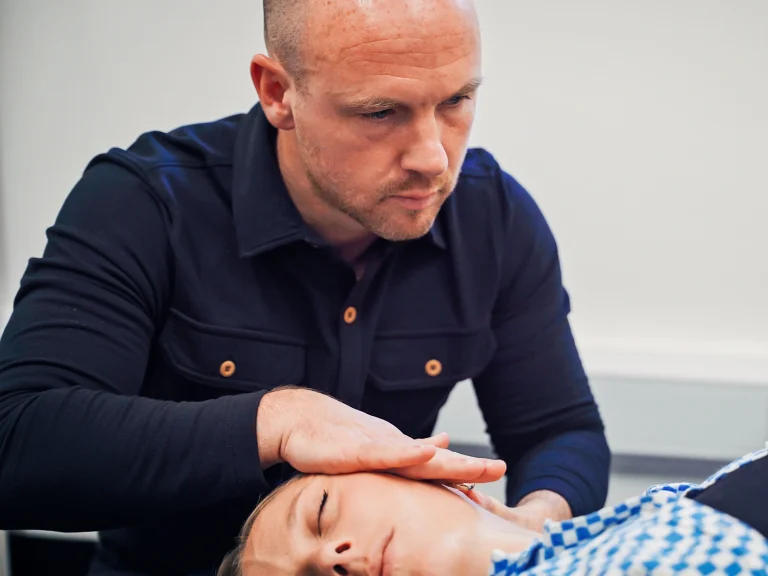
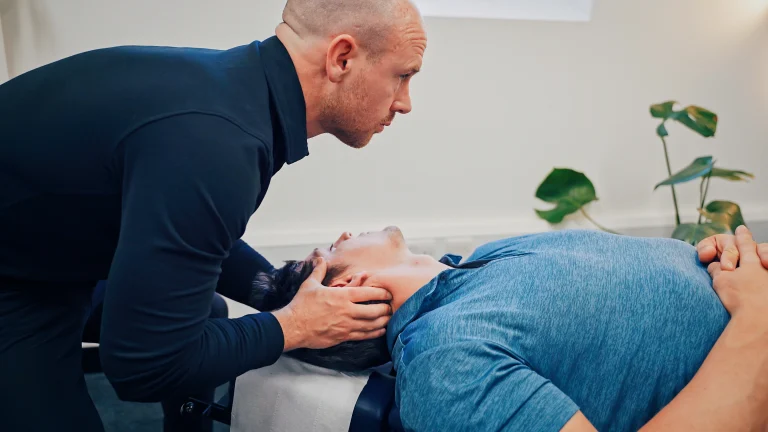
Not every chiropractor works with jaws, so ask before you book. Those who do look at the jaw alongside the neck and upper back. That matters, because the muscles that move your jaw work closely with your neck, and tension in one often feeds the other.
At our clinic, care for jaw pain and TMJ is gentle. It often includes cranial techniques and work on the jaw muscles, alongside the neck and upper back, plus practical changes to help with clenching. If you’re curious about the overlap, our guides to jaw clenching, neck pain and headaches and whether TMJ problems can cause headaches go into more detail.
Best for: jaw pain that keeps coming back, especially with neck tension, headaches or pressure that never seems to go away, or when a splint or massage has only helped for a while.
So where should you start?
- If a tooth or your bite could be involved, or you grind heavily at night: see your dentist first.
- If you want relief from tight muscles: massage can help.
- If your jaw is restricted or the pain followed an injury: a physio who works with jaws is a good option.
- If it keeps coming back, or comes with neck tension, headaches or head pressure: it’s worth an assessment that looks at the jaw, neck and head together.
These aren’t either/or. Plenty of people do best with a splint from their dentist and hands-on care alongside it.
What you can do in the meantime
- Eat softer foods for a week or two, and give chewing gum a rest.
- Hold a warm flannel against your jaw for 10–20 minutes. Some people find cold works better, so try both.
- Avoid opening your mouth very wide, including big yawns.
- Notice daytime clenching. At rest, your teeth should be slightly apart.
- Look after your sleep and stress levels, because both make jaw tension worse.
When to see your dentist or GP first
Get checked promptly if you have swelling, a fever, pain after an injury to your face, a jaw that locks open or shut, numbness, or pain that’s getting rapidly worse.
If your jaw pain keeps coming back
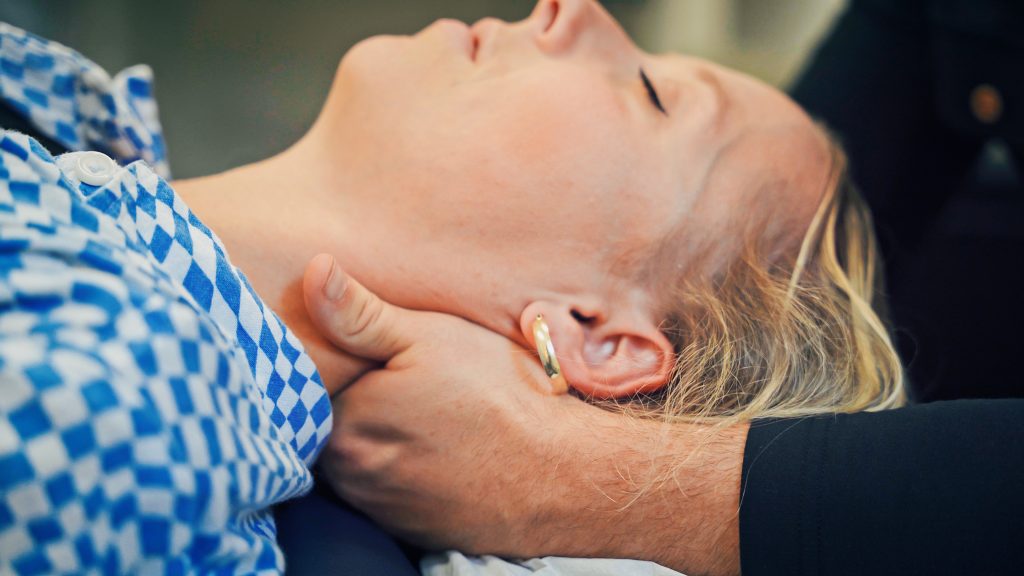
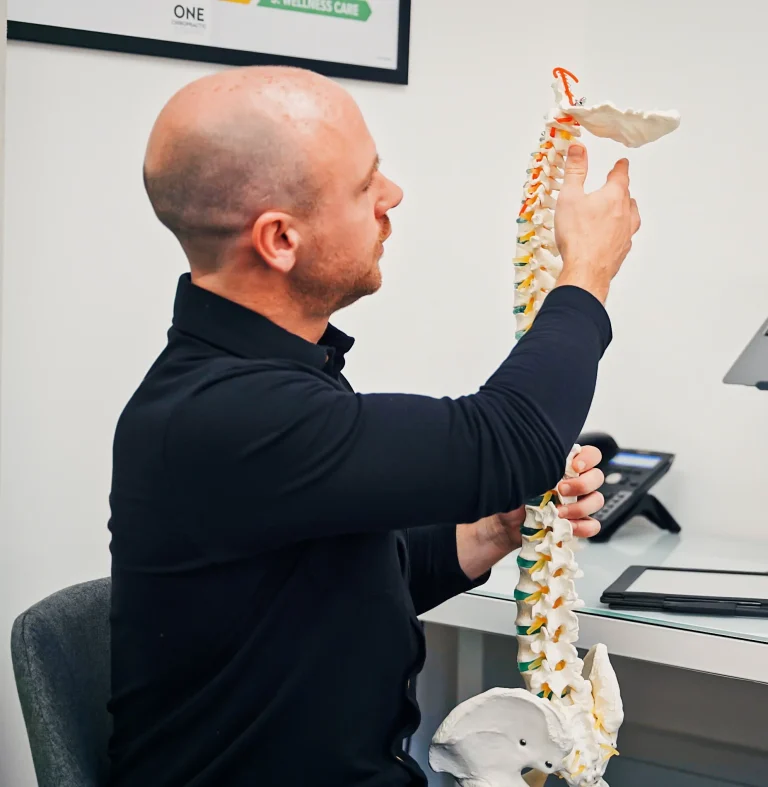
We’re a specialist clinic in Leith, focused on headaches, migraine, neck and jaw pain. Paul Holmes has more than 15 years’ clinical experience, and his training in Cranio Fascial Dynamics with Dr Jonathan Howat looks at how your jaw moves and what’s loading it.
Your first appointment includes a full assessment, a clear explanation of what’s causing your symptoms, and treatment the same day where appropriate. Paul uses a wide range of techniques, many of them very gentle, and the choice of treatment is always yours.
→ Jaw pain and TMJ | Neck pain | Headache treatment | Migraine prevention
Find out what’s behind your jaw pain
If your jaw has been aching, tight or clenched for longer than you’d like, your first appointment will show you what’s causing it. Treatment can usually begin the same day.

Paul is the principal chiropractor at One Chiropractic in Leith, Edinburgh. He holds a master’s degree in chiropractic, is registered with the General Chiropractic Council and has more than 15 years’ clinical experience, focusing on headaches, migraine, neck and jaw pain.
If this sounds like what you’re dealing with, your first appointment will show you what’s causing it, and treatment can usually begin the same day.
Research referenced: Herrera-Valencia A, et al. Efficacy of manual therapy in temporomandibular joint disorders and its medium- and long-term effects on pain and maximum mouth opening: a systematic review and meta-analysis. Journal of Clinical Medicine, 2020.