Migraines, Neck Tension and Jaw Tightness: Why They Often Happen Together
Migraines can be exhausting, unpredictable and disruptive. For some people, they arrive with intense head pain, nausea, light sensitivity or visual disturbance. For others, the migraine itself is only part of the picture.
Many people who experience recurring migraines also notice other patterns, such as a stiff neck, tight shoulders, pressure at the base of the skull, jaw clenching, facial tension or pain around the temples. Sometimes these symptoms build before a migraine. Sometimes they linger afterwards. In other cases, they seem to be present almost all the time.
If this sounds familiar, it can be frustrating. You may have been told your symptoms are “just stress”. While stress can certainly play a role, recurring migraines with neck tension and jaw tightness often deserve a more detailed look at how the head, neck, jaw and nervous system are interacting.
At our Edinburgh chiropractic clinic, we often see people who are not dealing with one isolated symptom, but with a pattern involving the neck, jaw, shoulders, head and face.
Migraine Is More Than Just a Headache
A migraine is not simply a bad headache. It is a complex neurological condition that can affect how your nervous system processes pain, light, sound, movement and other triggers.
Migraine symptoms can vary from person to person, but they may include:
- Throbbing or pulsing head pain
- Pain on one side of the head
- Nausea or vomiting
- Sensitivity to light, noise or smell
- Visual changes or aura
- Dizziness or brain fog
- Fatigue before or after an attack
- Neck stiffness or pressure around the head
Because migraine affects the nervous system, it can be influenced by many different factors. Hormones, sleep, stress, dehydration, diet, medication use, posture, physical tension and previous injuries may all play a role in different people.
This is why two people with migraines can have very different experiences. One person may get migraines linked to hormonal changes. Another may notice attacks after long screen time, poor sleep and neck stiffness. Someone else may feel jaw pressure, temple pain and facial tension before symptoms escalate.
The key is not to assume there is one single cause. The aim is to understand your pattern.
Why Neck Tension Can Be Part of the Migraine Picture
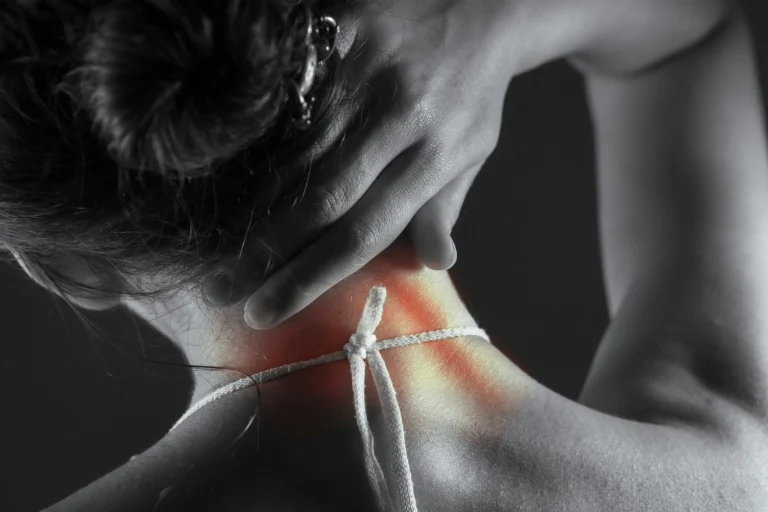
The neck and head are closely connected. The upper neck, base of the skull and surrounding muscles contain joints, nerves and soft tissues that can influence how comfortable your head feels day to day.
When neck pain or stiffness becomes persistent, it can contribute to symptoms such as:
- Pain at the base of the skull
- Pressure into the temples
- Headaches that build with posture or screen use
- Shoulder and upper back tightness
- Reduced neck movement
- Pain that feels worse after sitting, driving or working at a desk
This does not mean every migraine is “caused by the neck”. Migraine is more complex than that. However, neck tension can be one of the physical factors that adds load to an already sensitive system.
For example, someone may be prone to migraine, but notice that attacks are more likely after a week of poor sleep, long desk hours, stress and increasing neck stiffness. In that case, the neck may not be the only factor, but it may still be an important part of the overall pattern.
This is especially common in people who spend long hours at a laptop, work from home, drive frequently, look down at a phone, or hold tension through the shoulders and jaw when concentrating.
How Jaw Tightness Can Add to Head and Neck Symptoms
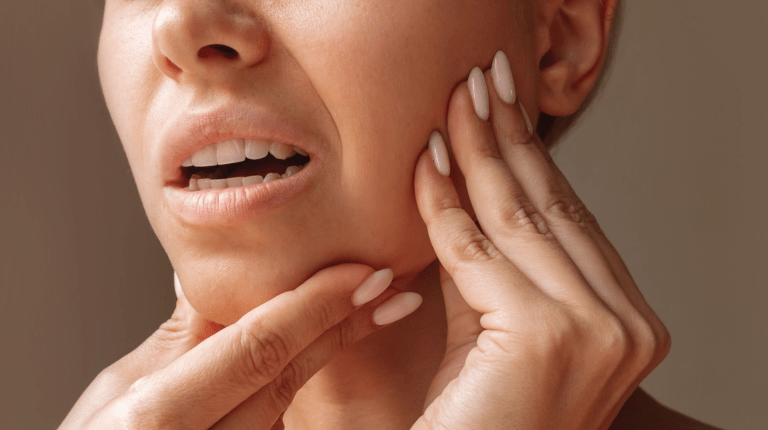
The jaw is often overlooked in people with recurring headaches and migraines. Yet jaw pain and tension can have a significant impact on the surrounding muscles and joints of the face, temples, neck and skull.
Jaw-related symptoms may include:
- Clenching or grinding the teeth
- Tightness in the jaw when waking
- Clicking or popping in the jaw joint
- Pain around the jaw, ear or temple
- Difficulty opening the mouth fully
- Facial tension or pressure
- Headaches around the temples
- Neck stiffness alongside jaw discomfort
The jaw joint, also called the temporomandibular joint or TMJ, works closely with the muscles of the face, head and neck. If you clench your jaw when stressed, grind your teeth at night, chew more on one side, or hold your mouth in a tense position, the surrounding tissues can become irritated.
Again, this does not mean the jaw is always the root cause of migraine. But jaw tightness can add strain to the same areas that are already involved in headaches, facial tension and neck discomfort.
For some people, the pattern is clear: jaw clenching leads to temple pressure, which builds into a headache. For others, it is more subtle. They may only notice that their jaw feels tight during stressful periods, or that their migraines are worse when their neck and shoulders are also tense.
Why These Symptoms Often Happen Together
Migraines, neck tension and jaw tightness often overlap because the head, neck and jaw are not separate systems. They share muscles, movement patterns, nerve pathways and stress responses.
There are several reasons these symptoms may appear together.
1. Stress and clenching
Stress commonly shows up physically. Some people hold it in their shoulders. Others clench their jaw, tighten their neck or breathe more shallowly. Over time, this can increase tension through the face, temples, neck and upper back.
2. Desk posture and screen use
Long periods of sitting, laptop work or phone use can increase load through the neck and shoulders. If you are concentrating intensely, you may also clench your jaw without realising it. This combination can create a cycle of neck stiffness, jaw tightness and head pressure.
3. Poor sleep and recovery
Migraine patterns are often affected by sleep. Poor sleep can increase nervous system sensitivity, while night-time grinding or clenching can leave the jaw and temples sore by morning. If the neck is also stiff, the system may feel even more irritated.
4. Previous injury or long-term compensation
Old injuries, such as whiplash, sports injuries or falls, can sometimes change how the neck and jaw move. Even if the injury happened years ago, some people continue to develop recurring tension patterns that affect the head, neck and shoulders.
5. A sensitive nervous system
People with recurring migraines often have a nervous system that is more reactive to triggers. Physical tension, stress, light, sound, hormones, dehydration or lack of sleep may all contribute. Reducing physical strain through the neck and jaw can sometimes be one useful part of a broader management plan.
Signs Your Migraine Pattern May Involve the Neck or Jaw
It may be worth having your neck and jaw assessed if you notice any of the following:
- Your migraines often start with neck stiffness
- You feel pressure at the base of the skull before headaches
- Headaches build after desk work, driving or screen time
- You wake with jaw tightness or temple pain
- You clench or grind your teeth
- Your jaw clicks, locks or feels restricted
- Headaches are worse during stressful periods
- You have recurring shoulder and upper back tension
- You feel one-sided neck, jaw or facial tightness
- You have had scans or tests that were normal, but symptoms persist
These signs do not replace medical diagnosis, and they do not prove that the neck or jaw is the cause. But they do suggest that a more detailed physical assessment may be useful.
How a Chiropractor Can Assess
A good assessment should not simply focus on where the pain is. With migraines, neck tension and jaw tightness, it is important to understand how the whole pattern behaves.
At our Edinburgh clinic, an assessment may look at:
- Your migraine history and symptom pattern
- Neck movement and stiffness
- Shoulder and upper back tension
- Jaw movement, clicking or restriction
- Muscle tension around the temples, face and base of the skull
- Posture and desk habits
- Previous injuries
- Sleep, stress and lifestyle triggers
- What makes symptoms better or worse
The aim is to identify whether there are physical factors contributing to your symptoms, and whether chiropractic care may be appropriate for you.
Treatment may include gentle manual techniques, work around the neck and upper back, jaw-related assessment, cranial techniques where appropriate, soft tissue work, movement advice, posture support and practical strategies to reduce repeated strain.
The right approach depends on the individual. Some people need help improving neck movement. Others need support reducing jaw tension. Many need a combination of treatment, advice and habit changes.
What You Can Try at Home
If your symptoms involve neck tension and jaw tightness, the following may help reduce everyday strain:
- Take regular screen breaks before tension builds
- Keep your laptop or monitor closer to eye level
- Avoid resting your chin in your hand
- Notice whether your teeth are touching during the day
- Let your tongue rest gently on the roof of your mouth
- Keep your jaw relaxed when concentrating
- Avoid chewing gum if your jaw is irritated
- Use heat around the neck and shoulders if it feels soothing
- Prioritise sleep and hydration
- Track migraine triggers without becoming obsessive
A simple rule for jaw tension is: lips together, teeth apart. Your teeth should not usually be clenched together at rest.
These steps will not resolve every migraine pattern, but they can reduce some of the daily load on the neck and jaw.
Getting Help for Migraines, Neck Tension and Jaw Tightness in Edinburgh
If migraines, neck tension and jaw tightness seem to feed into each other, it may be time to look at the pattern more closely.
Many people come to us after trying painkillers, massage, dental checks, posture changes or simply waiting for the symptoms to settle. Sometimes those things help temporarily, but the same cycle keeps returning.
A detailed chiropractic assessment can help identify whether your neck, jaw, shoulders or cranial mechanics are contributing to your symptoms, and whether treatment may be suitable.
If you are based in Edinburgh and are dealing with recurring migraines, neck stiffness, temple pressure, jaw clenching or facial tension, we can help you understand what may be driving the pattern and what your next steps should be.
Book an initial consultation today and take the first step towards understanding the connection between your migraines, neck tension and jaw tightness.